


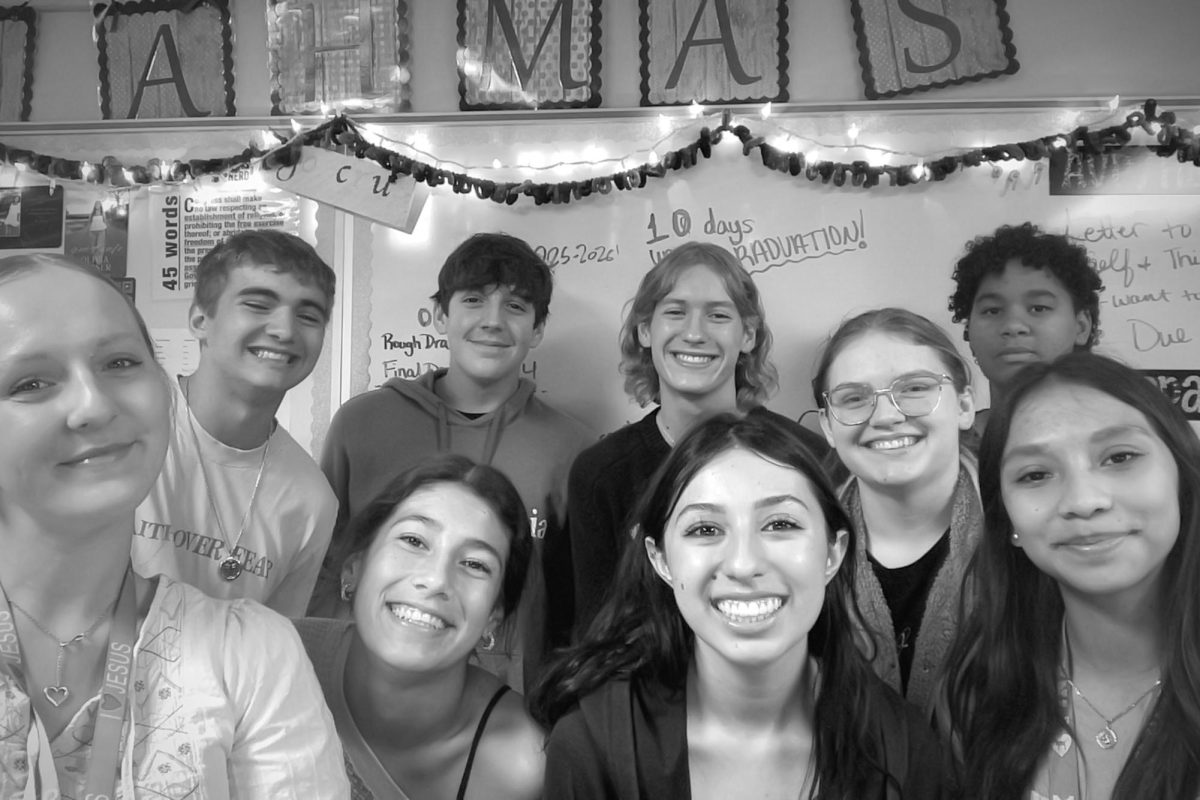





With finals in four weeks, current seniors are working to ensure that nine of them don’t end up in ISS, so they don’t have to worry about taking their finals. Currently, only seniors can get exemptions, which is an incentive-based program where they must pass all of their classes, meet a certain attendance percentage, and not have too many people go to ISS from Feb. to May. If they can accomplish that, seniors are exempt from exams and the last week of school. Principal Mason Briscoe explains why only seniors are able to qualify for exemptions.
“My philosophy is high school is the step before secondary education, which is your higher institute, which is a two-year trade school, college, a two year university and all of those take finals at the end of their semesters, so what i’m doing is i’m trying to prepare students for the end of those semesters in college just like high school you would take a cumulative final that encompasses everything that you went over that semester so that’s why we do it for all other grades,” Briscoe said.
A counselor at the high school, Brooke Mathews, shares her opinion about seniors and underclassmen having an exemption rule.
“I think the seniors really like it because it kicks off they’re close to graduating and now we get to have an extra week of summer, I think the underclassman could benefit from it, it might give them some motivation for if you’re on the borderline for attendance for grades, it can motivate some grades I think that there’s still a chunk that it won’t motivate them at all, it’s great for some but not so great for others,” Mathews said.
But along with its perks for underclassmen, it can be a lot for administrators to ensure the whole school has exemptions. A counselor at the high school, Dena Strauss, shares her thoughts on how challenging it is to keep up with all the students and the other challenges some students may pose.
“The challenge is having to keep up with who is passing, how many absences they have. One more thing for teachers to add to their already busy end-of-the-year duties. The record keeping is daunting to say the least! Students continually pester teachers about grades getting entered into Skyward or missing work and also bothering Mrs. Dornak about their absences (to the point of arguing about them and/or having parents do the same),” Strauss said.
Along with these challenges, Strauss believes that underclassmen need to earn their perks, such as exemptions.
“I think underclassmen need to earn whatever ‘perks’ upperclassmen get as seniors (like the optional off period). They have been here four years and have “paid their dues,” so to speak. If you give exemptions too early in a student’s academic career, they will not be prepared for exams in college, should that be their path. Some courses may not offer exemptions, and preparing for exams (aka STUDYING!!) is a skill students need to learn in high school. Otherwise, it comes as a shock to some students’ systems. (“What?!! Study?!! What’s that?” I can hear it now!),” Strauss said.
Briscoe believes that having the exemption could be both fair and unfair to some students.
“I think it could be fair, and sometimes it’s not fair. When I went to high school, they did do an exemption for every grade, it just gets confusing for teachers because you have to lay out some type of exemption policy and that means if it’s an absent policy, if they’re absent for more than three days they can’t get it, like I said you can make it to where it gets too much grey area so that’s why I don’t like exemptions for all grades.
But in the end, it’s a different situation for every student, and granting exemptions could help some but hurt others.
“I know this sounds harsh, but I don’t think we need to bribe kids to do what is already expected of them. Of course, having said that, I could probably be persuaded to look at case-by-case situations (seniors) to determine the possibilities of exemptions for jobs above and beyond expectations.” Strauss