
















As January moves out and February moves in, a month of celebration takes place. February is when Black History Month takes place.
Black History Month is a very important month because it honors the contributions, achievements, and central role of Black people in history. For Feb. 2026, the theme for black history month is “A Century of Black History Commemorations.”
One hundred years ago, in Feb. 1926, Black History Month found its origins. On Feb. 7, 1926, the first recognized celebration for black history took place. Known as Negro History Week, it was started by Carter G. Woodson to celebrate and bring attention to the history of African Americans.
In honor of a full century of black history, here are different events and people from the past 100 years in black history.
1920s
In the 1920s, the Harlem Renaissance was at its peak. The Harlem Renaissance was a cultural movement taking place in the Harlem neighborhood of Manhattan, New York. During this time, there was a lot of racism in the south and many African Americans moved further up north. Harlem became home to around 175,000 African Americans from all walks of life.
This time is seen as a revival of art and literature for African American culture, with a take off of music such as jazz and swing, and art forms such as poetry, painting, and sculpture. This was a time that redefined the lives of African Americans and transformed social oppression into a great pride in racial identity.
1930s
The 1930s were an important time in black history. During this time, the Tuskegee Syphilis study started. This was a study to monitor how untreated syphilis affected the body. The participants of the study were 600 African American men; 399 of these men had undiagnosed syphilis, while the other 201 did not and functioned as a control group. The men studied for 40 years and were informed that they were a part of a government health care program. None of these men knew the true purpose of the study, nor were any of them informed that they had syphilis. The men were not treated for their diseases, even after treatment became widely available; they were instead treated using methods that were known to be ineffective or harmful.
The study resulted in a class-action lawsuit, and many of the men’s families received payment for their participation. This study is an example of the racism that many African Americans faced in America and helped shape research standards and legal protections for all Americans.
1940s
During the 1940s, the world was actively fighting World War II, and from this war came the Tuskegee Airmen. The Tuskegee Airmen were a mostly African American group of militarypilots whot fought in World War II. These were the first African American men to fly for the US Air Force, and they helped pave the road for others.
There was originally some doubt about the Tuskegee Airmen, but as time passed, people began to see how skilled they were. This doubt was left more when First Lady Eleanor Roosevelt flew with chief instructor Alfred “Chief” Anderson.
1950s
The 1950s were a key time in black history for the rise of the civil rights movement. In 1953, racial segregation was beginning to be eradicated in cases such as District of Columbia v. John R. Thompson Co., Inc., and Brown v. Board of Education. As well as infamous events taking place, such as the Montgomery bus boycotts, which led to the desegregation of Alabama public transportation.
1960s
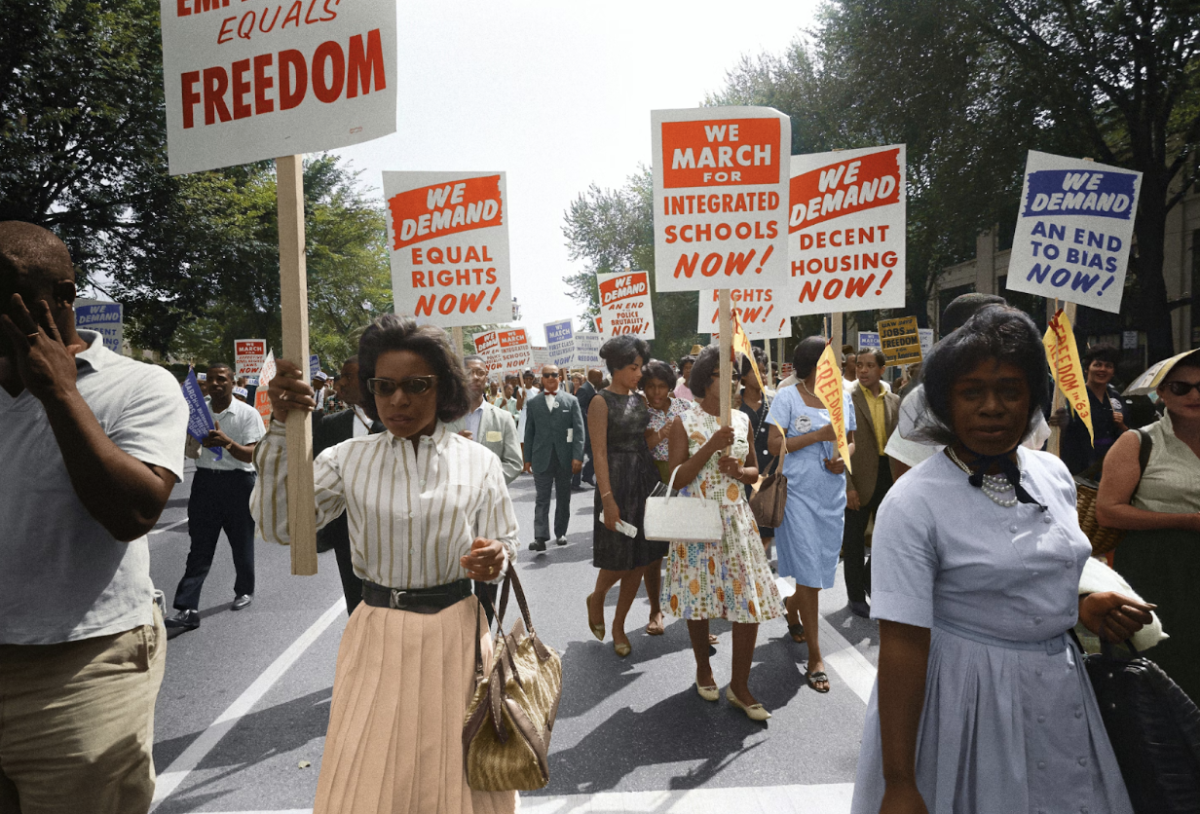
During the 1960s, the civil rights movement that was started in the 50s is now in full swing. The 1960s had iconic events such as the Greensboro sit-ins, where four black students sat at a lunch counter reserved for white patrons and refused to leave. This garnered a lot of support. On August 28, 1963, the March on Washington took place, where 250,000 people marched to protest for the civil rights of African Americans. This is where Martin Luther King Jr. gave his famous “I have a dream” speech.
1970s
The 1970s were a time of post-Civil Rights Movement for black Americans. During this time, achievements were smaller, but still impactful. During this time, there was a rise of African Americans in politics, with many political positions being fulfilled by African Americans for the first time. There was also a rise of African Americans in pop culture, with many showing their faces in media, sports, and entertainment.
1980s
The 1980s showed a lot of different things for black Americans across the country. There was a rise in popularity for many black stars, such as Michael Jackson, whose Thriller album became the top-selling album of all time, or Alice Walker, author of The Color Purple, wins the Pulitzer Prize, as well as others, such as Oprah Winfrey, Mike Tyson, and Aretha Franklin.
1990s
The 1990s were a great time for African Americans to find their time on the big screens. During this time, there was a big increase in African Americans on TV. Shows such as The Fresh Prince of Bel-Air, Living Single, and Family Matters. This was also a big time for music made by African Americans, with a growth of Hip-hop and Rap, with celebrities such as Snoop Dog, Tupac, and Dr. Dre.
2000s
The 2000s marked unprecedented political milestones with Colin Powell becoming Secretary of State, who was the first African American to hold that position. He was shortly followed by Condoleezza Rice, who was the first African American woman to hold the same position. There was also Edith Peterson Mitchell, who became the first African American woman to be promoted to Brigadier General in the Missouri National Guard. The 2000s also saw Barack Obama, as he became the first African American president of the United States.
2010s
The 2010s were a landmark decade for black Americans. This decade in black history is defined by the Black Lives Matter movement that took place after the Fregeson protest, which was protested in Ferguson, Missouri, after the shooting of Michael Brown by FPD officer Darren Wilson. This sparked debate about police brutality and united people against racism.
2020s
The 2020s are the time many remember vividly, because they are still happening. The 2020s had a resurgence of the Black Lives Matter movement after the death of George Floyd in 2020. There were also political firsts as Kamala Harris became the first Black and South Asian American Vice President. In 2021, Juneteenth became a national holiday.
It is very important to recognize and honor black history, as this year marks the 100th year celebrating black history.